

Alex Yudzon on 5 Garfield Avenue
MS: I see that you’ve been teaching some classes over the last year?
AY: Yeah,I’ve had some opportunities to teach —mostly workshops with photographers, but also a few writers and painters—and it’s interesting how it affects your own work.
Even when you’re explaining really basic ideas—things you think are second nature—you’re forced to articulate them clearly. You end up talking about courage, non-linear thinking, counterintuitive approaches—all these foundational ideas.
And then you go back into the studio, and those same ideas hit you again. You think, oh yeah—courage, that’s right.
It reinforces something. It sharpens your instincts, almost like strengthening a muscle. It gives you a jolt when you’re working on your own projects.
I think that’s what keeps you from getting stagnant—keeping those principles fresh in your mind.
MS: Completely. One of the things I talk to my students about all the time is not getting fixated on producing a finished product. And yet, I can be very guilty of that in my own studio work. So it’s a really good reminder for me to try to find a rhythm in the studio, rather than chasing an outcome.
AY: I’ve had almost the exact same experience—and I use the same language with my students.
MS: Exactly. I tell students not to focus on the product, to let the process guide them. Then I get into the studio myself and find that I have the same problems as my students. In those moments, I have to coach myself and remember that it’s not about results. I have to slow down and trust the process. You end up reminding yourself of your own advice, and that helps a lot.
How did you end up teaching those courses? I was really interested in them and considered taking one.
AY: My good friend Janelle Lynch, a wonderful photographer who has published a number of books with Radius, runs an online platform called The Salon. It’s a superb workshop where photographers go over readings, review and polish bodies of work and host guest speakers.
It’s a really rigorous way to continue your education in a group setting. She’s had great success—her students are incredibly loyal. Some have been there since the beginning, while others come and go. Many are quite accomplished, with their own books and publications.
We became friends after I joined Radius. We had a number of great conversations over the years, and she asked if I’d be interested in teaching.
The response to the first session was so strong that I ended up creating another. The classes aren’t open-ended like many photography workshops—they follow a structured curriculum. Each week focuses on a specific creative theme, with a lecture and examples of how different artists approach that topic.
For example, one week might be about memory: looking at three artists and how they interpret it, along with some philosophical ideas that shape how we think about memory today. Because of that structure, students can’t really take the same class twice—but they wanted to keep going, so I developed a second and then a third tier for them.
I'm not sure when the next iteration will be, but I'm hoping to do part three in August. If not, we’ll run part one and two again in September.
MS: After I finished grad school, I spent a couple of years just settling down. It wasn’t until later that I really started thinking seriously about reading again. So much of what I’ve learned about creativity—and studio life —has actually come from what I’ve read since grad school. It’s been self-directed.
That idea of continuing your education for the rest of your life is, for me, what makes all of this possible. I’m a slow learner — I have to slowly build understanding over a long period of time. When I look back at grad school, it feels like a whirlwind. A lot of what has actually stuck with me — the things that have shaped my values around art has come from my own reading after grad school.
I've approached that reading almost as an educator would, using it to identify gaps in my own art education. I read art criticism and modern art history, and more recently I've been studying the history of photography.
I think it’s great that you’re offering ways to continue education. I’ve had a similar experience teaching. I teach because I enjoy it, but I also do it because it’s good for my own studio practice. It forces me to stay focused and keep studying. If I want to do a good job as an educator, then I also have to be a good a student. I think that’s part of why I’m willing to take on multiple gigs for very little pay—I genuinely like being a student, and I don’t think I’ll ever get tired of that.
AY: That’s such a great point. I’m like you—I consider myself a slow thinker. And I don’t see that as a negative. We tend to treat “slow” and “fast” as qualities with different values attached to them, but I don’t think one is better than the other. They’re just different ways of processing.
For me, it takes time to really absorb something—to ingest it and digest it properly so I can get what I need from it. And I’ve realized through teaching that there’s a big difference between reading something for enjoyment and reading it with the intention of using it. Taking notes and preparing a presentation are completely different modes of learning.
MS: Yeah, I have a really hard time retaining material if I’m not highlighting and taking notes. Building presentations and lectures also helps me solidify what I’ve learned. If I can sort artwork into categories and timelines, then I know that I have an understanding.
AY: Yeah, I’m exactly the same way—especially with dense material. Highlighting and then figuring out how to condense those ideas for a lecture really locks the information in. It’s been interesting to realize how much I’ve learned just from preparing these lectures. That wasn’t something I anticipated, but over the past nine months, it’s felt like I’ve been in a kind of self-directed graduate program.
MS: What is the class material like?
AY: The material builds on itself, and it begins with a foundational idea: that trickster mythology is central to how creativity works.
In the first class, we explore what trickster mythology is, where it comes from, and how it appears across cultures. It’s an archetype identified by Jung, and it shows up in both ancient and modern societies worldwide. You see it in figures like Loki, Hermes—even Prometheus. If you’ve seen Moana, Maui is a quintessential trickster.
These figures are often demigods who move between the realm of the gods and the human world, carrying knowledge back and forth. They’re mischievous, amoral, and disruptive—they break things. But that destruction usually serves a purpose: it subverts systems that have become too rigid or authoritarian, making space for new, more vital forms of creativity and social structure to emerge.
It’s a powerful metaphor—not just for how societies evolve, but for something we need to cultivate within ourselves. We all have a kind of internal “pantheon,” and the trickster archetype plays an essential role in keeping our creativity alive.
Creativity often falls into confirmation bias. You set a goal, and everything becomes focused on refining and achieving it. That’s important—but it also narrows your vision. You start dismissing anything that doesn’t serve that goal and overvaluing anything that does. Over time, that mindset becomes its own kind of authoritarian regime within the mind.
MS: Right, exactly.
AY: And that’s what the trickster disrupts. It’s the force that breaks through over-reliance on authority—whether that authority is divine, societal, or internal. The trickster is the court jester. It’s Lenny Bruce, the late-night comedian, even Tyler Durden in Fight Club. It’s the figure that comes in, turns everything upside down, and forces you to see differently.
The trickster elevates what’s low, brings down what’s high, and creates chaos. But out of that chaos, new systems emerge.
That’s the foundation of the first class. From there, we use it as a lens to examine artists. We ask: what makes someone like John Baldessari a trickster? What strategies are they using? The idea is that great artists, in one way or another, have integrated this archetype into their work.
Take Duchamp—he used humor, subversion, even sabotage to dismantle conventions and reassemble them in new and inventive ways.
So without that initial framework, it’s harder to fully engage with the later material. Though, to be fair, I’ve probably just given you a condensed version of it. Still, I’d recommend starting with the first class—it shifts how you evaluate art. Instead of asking, “Is this good or bad?” you start asking what it’s doing.
For example, people debate Maurizio Cattelan’s banana taped to a wall—whether it’s “good” art or not. But that misses the point. In that moment, he’s acting as a quintessential trickster. The work is provocative, subversive—it challenges our assumptions about value, art markets, and meaning itself. The fact that it frustrates or angers people is part of its function.
MS: That makes a lot of sense.
Next time you offer the class, please add me to the email list—I’d love to take it. What you’re describing sounds both interesting and genuinely helpful, especially for people who aren’t currently in a program where they’re receiving regular critique. It’s easy to lose touch with those ideas otherwise.
And I’m always looking for new reading material. Half the time I just go to the library, wander the stacks, and revisit areas—especially in modernism—that I want to brush up on.
Photography, in particular, has been really rewarding over the past six years. It’s opened up a whole new set of artists for me to explore—people I might have overlooked before, not out of disinterest, but because I didn’t have a reason to engage with their work.
AY: Yeah, same here—exact same experience.
MS: Moving on, I had a general sense of what Garfield Ave was about. From what I understood, you moved away for a period of time—but I can’t remember where exactly. Where was it?
AY: Connecticut—specifically a town called Middletown. Do you know it?
MS: Yeah.
AY: It’s right between New Haven and Hartford—basically the midpoint between those two cities.
MS: Right, and you rented a place there—you didn’t buy. It was more of an open-ended plan, like you were maybe considering leaving New York?
AY: Not exactly. We always knew we’d only be there for a specific period—the fall and spring semesters—so essentially the academic year. We planned to go back to New York afterward. It wasn’t meant to be permanent. That said, we did think of it as a kind of trial run—if we ended up loving the area, the community, and the commute worked, maybe it could lead to something more long-term in a similar suburban setting.
MS: And Janessa—she was teaching at the time, right? Is that what brought you out there?
AY: Yeah, it was basically the same situation as now. She was teaching at MIT and had a brutal commute from New York. So we thought, maybe if we live halfway—she could drive up, I could drive down—it might be manageable. But it turned out to be terrible. Commuting in and out of the city is never what you hope it’ll be. My commute could take three hours each way—sometimes four, depending on traffic. Hers wasn’t much better. Even when roads were clear, something would always come up—accidents, storms, you name it.
MS: When we talked about your project before, what struck me was the psychological aspect of it. I’ve had similar experiences—situations where something makes sense on paper, like relocating somewhere unexpected, but you never quite feel at home. It’s like you’re just passing through, waiting for it to end.
There’s something strange—almost eerie—about that feeling of temporary belonging. I’ve experienced it through teaching, moving to places I never would’ve chosen, and feeling like I was just running out the clock.
Did you conceive of the project after living there, looking back and then shaping it into a series? Or were you already thinking about it while you were there, actively constructing images and scenarios as you went?
AY: That’s a great question. I think it was a bit of both. I tend to work in a very improvisational way, which probably comes from my experience as an immigrant—moving between countries, starting over, making do with whatever’s available.
That’s also why I’ve stayed so engaged with my hotel work. It recreates that early experience of displacement—something that felt like a loss of control as a child—but as a photographer, working in those spaces, I have agency. It’s a way of reclaiming that experience.
Something similar happened with this project. I hadn’t lived in a house since I was a teenager in the suburbs of Washington, D.C. Growing up in Russia, there were no suburbs — no private homes. People lived in apartment buildings unless they were in rural areas.
So moving to the U.S. and suddenly living in a house, in a suburb, was a completely new experience. It felt quiet, empty—almost eerie. Everyone was inside, in their own separate worlds. It was so different from the constant activity and social life around apartment buildings in Russia.
That period was really formative, but I left it behind when I went to college and moved to cities. I hadn’t thought much about it until Janessa and I moved into the house in Connecticut. Then all those memories came flooding back.
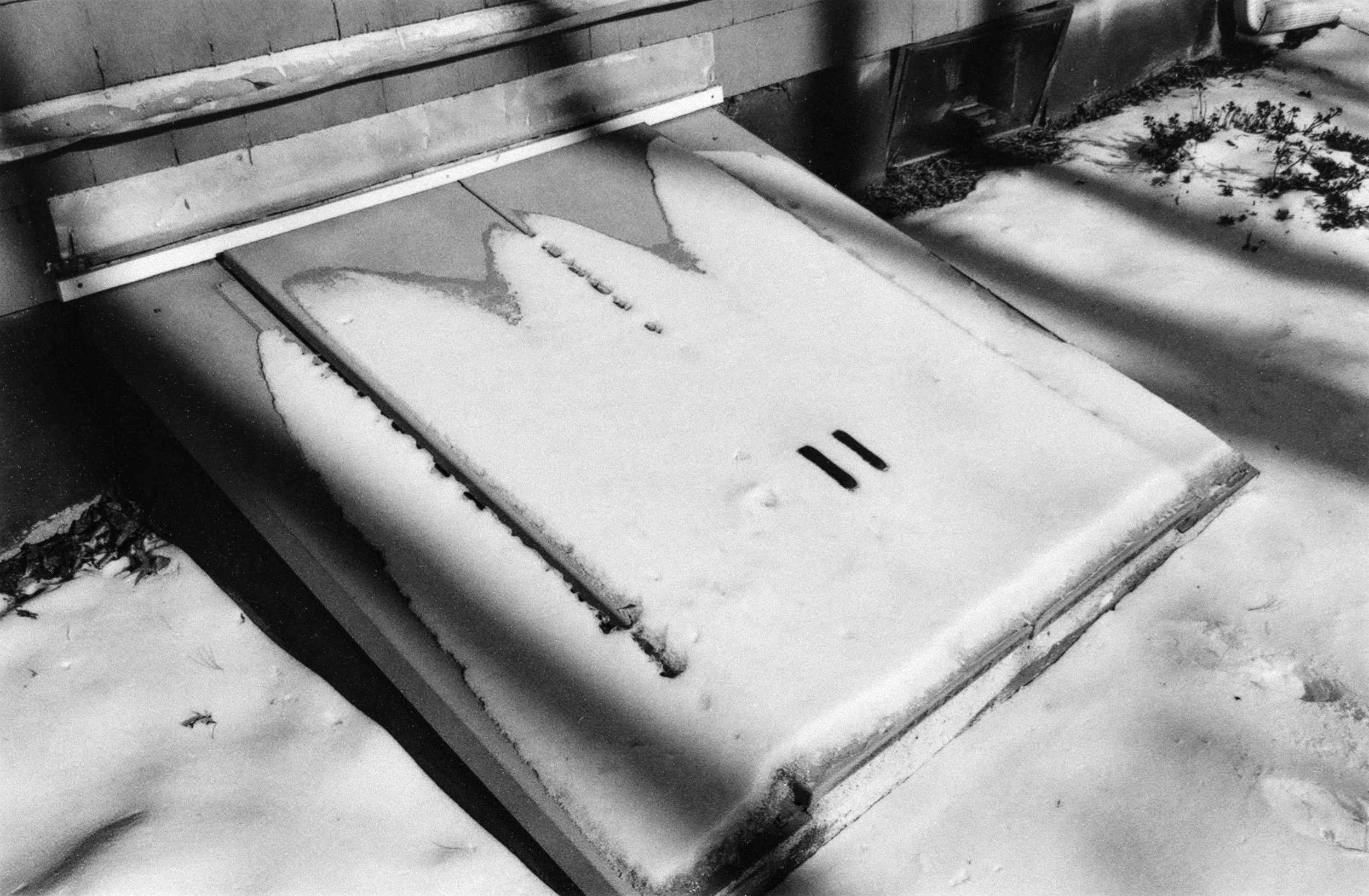
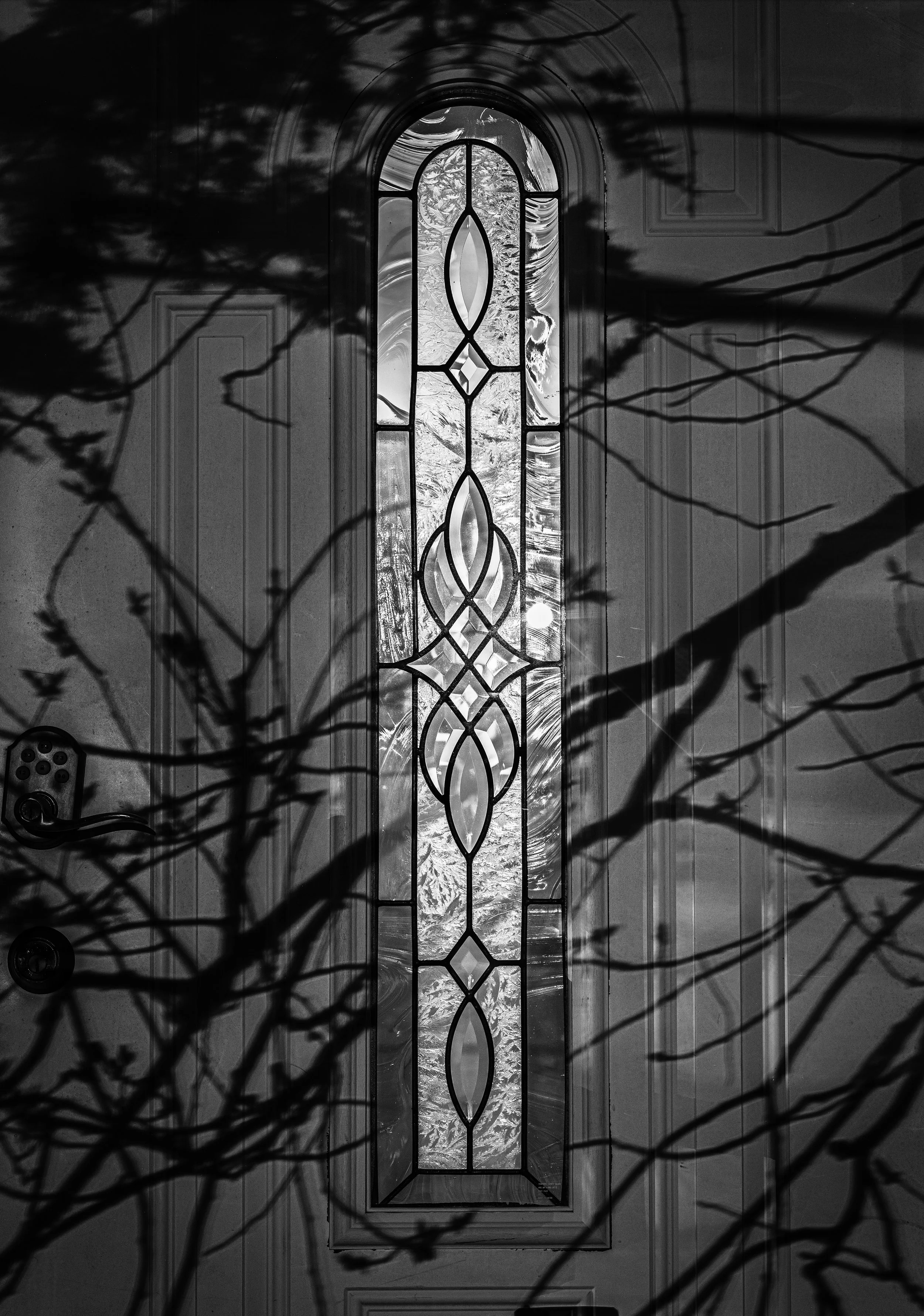
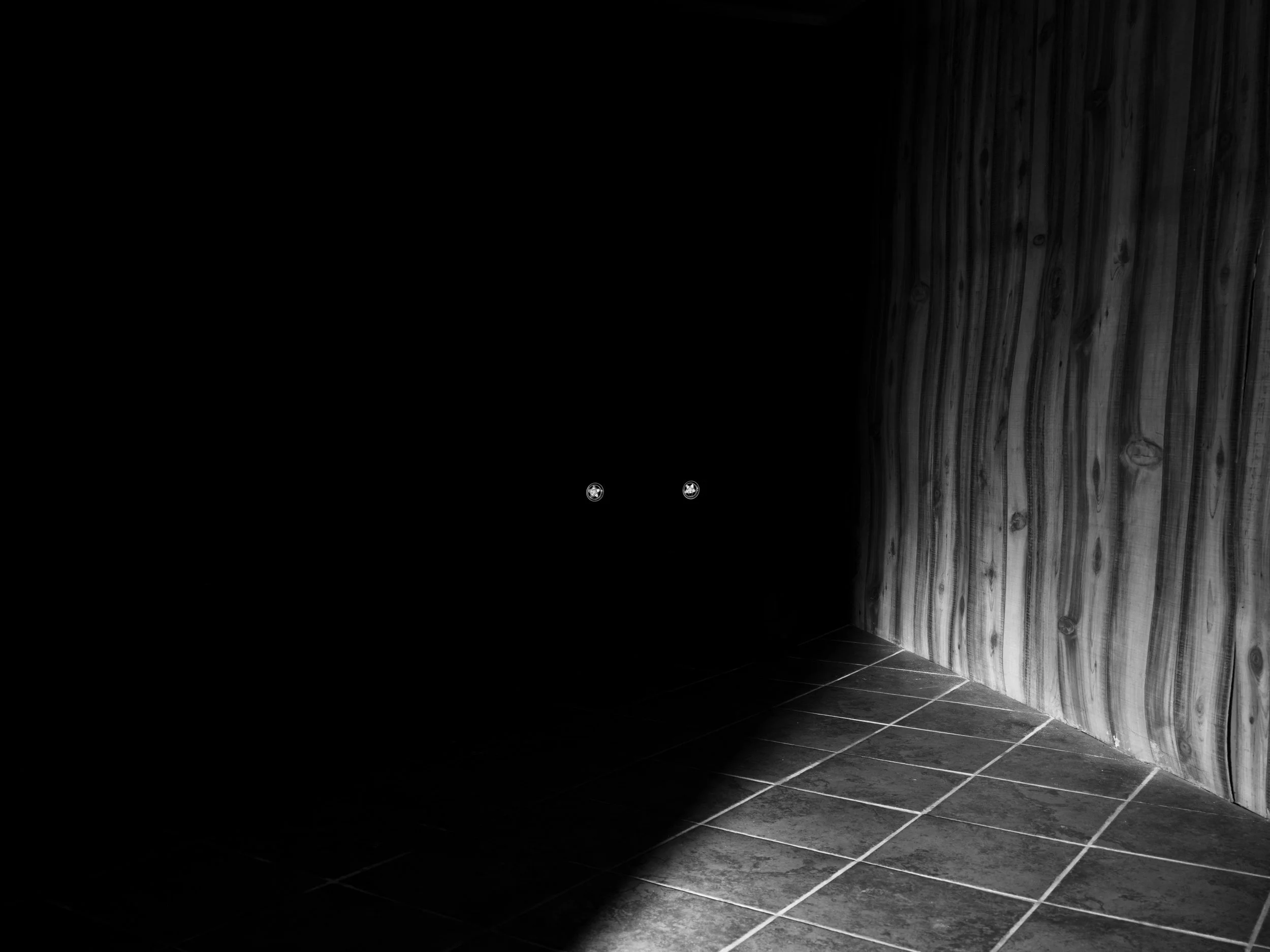
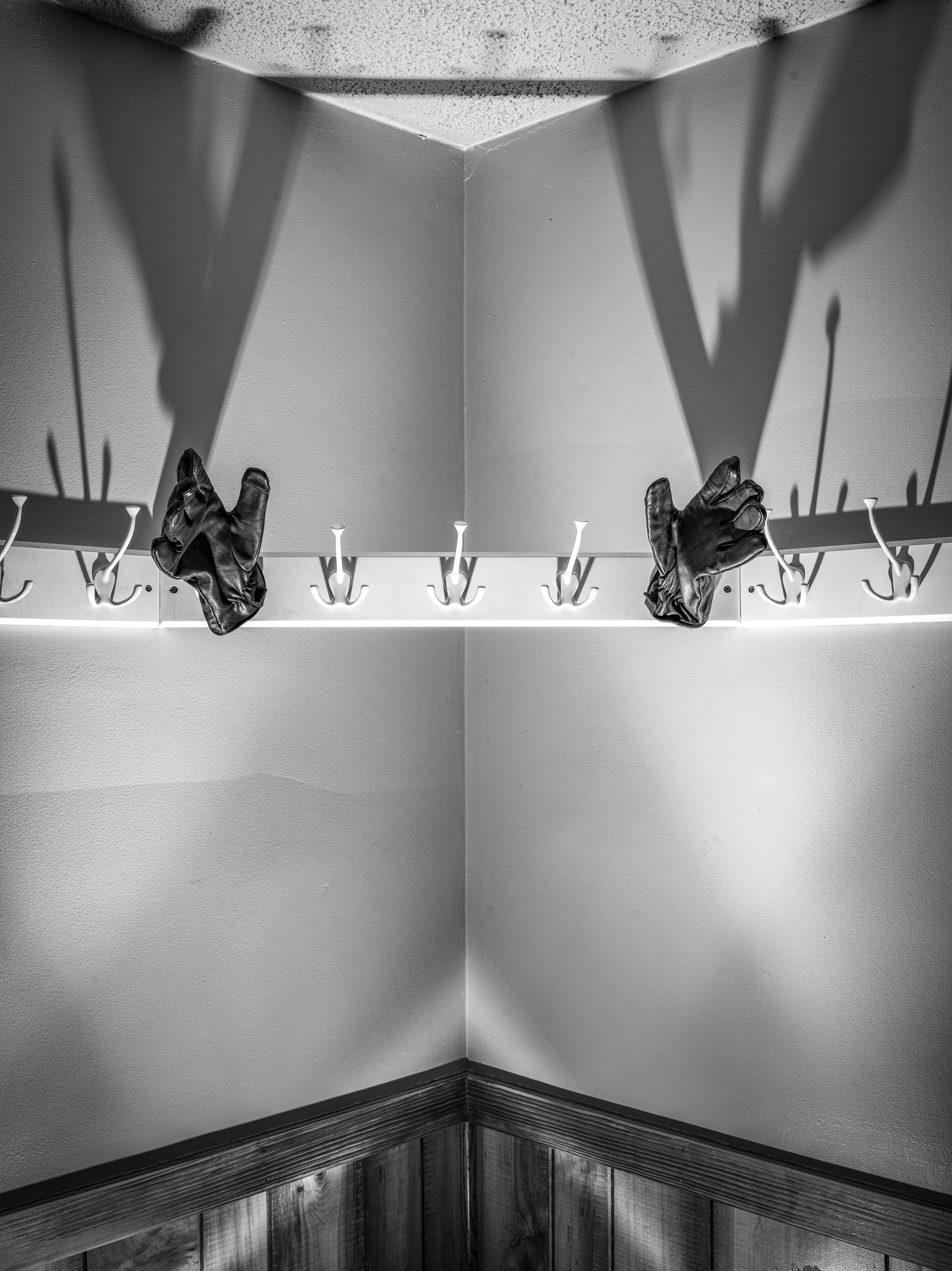
The house itself added to that feeling—it was old, almost like something out of a horror film. I remember when we were touring it, we went into the basement. It was wood-paneled, and the panels were buckled from what looked like past flooding. The real estate agent even said, “This is such a spooky place,” and Janessa immediately said, “This is so creepy.”
I remember thinking, yeah this is creepy—in a good way. I wanted to photograph it, to stage something there.
MS: Yeah, exactly.
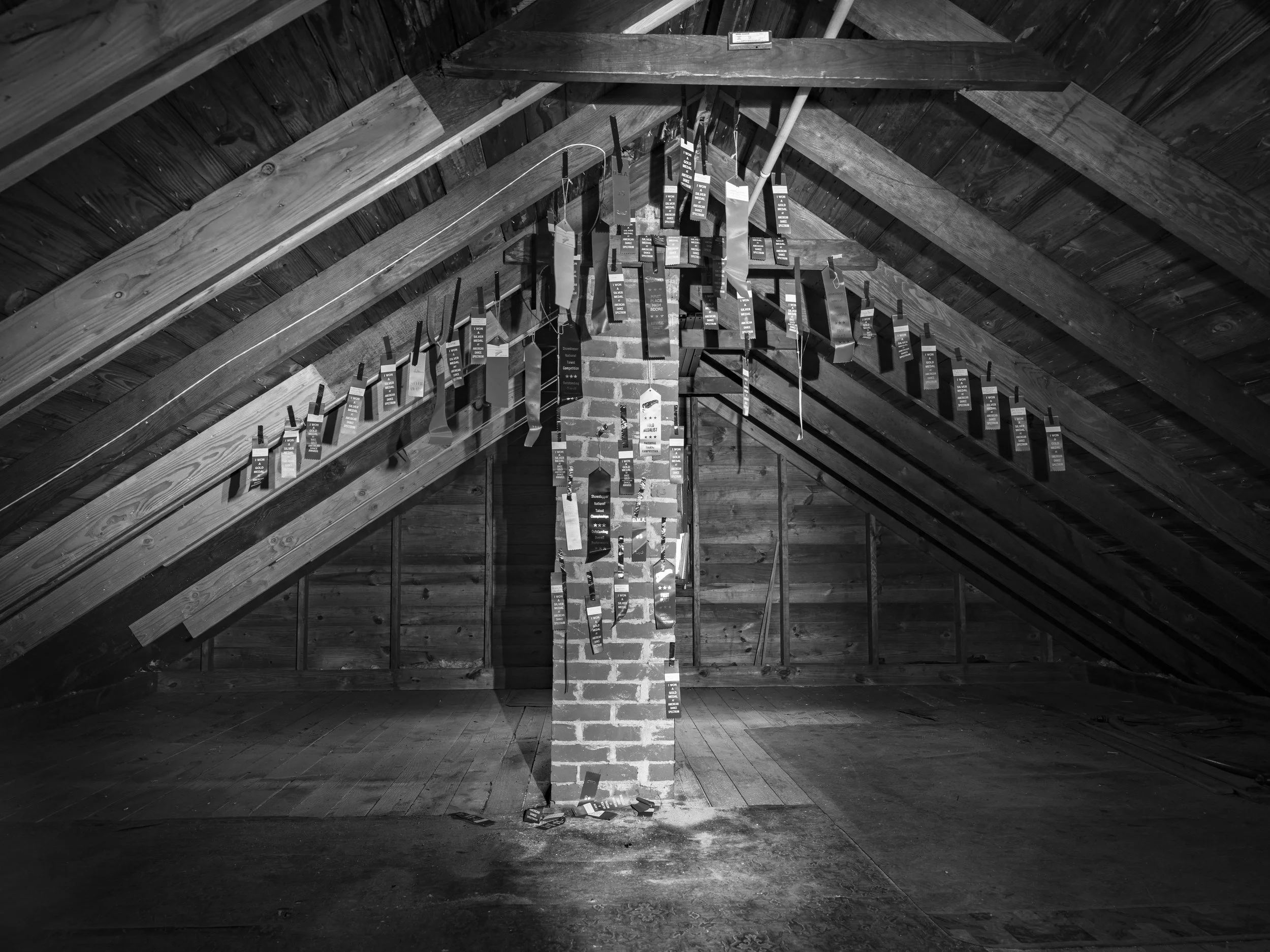
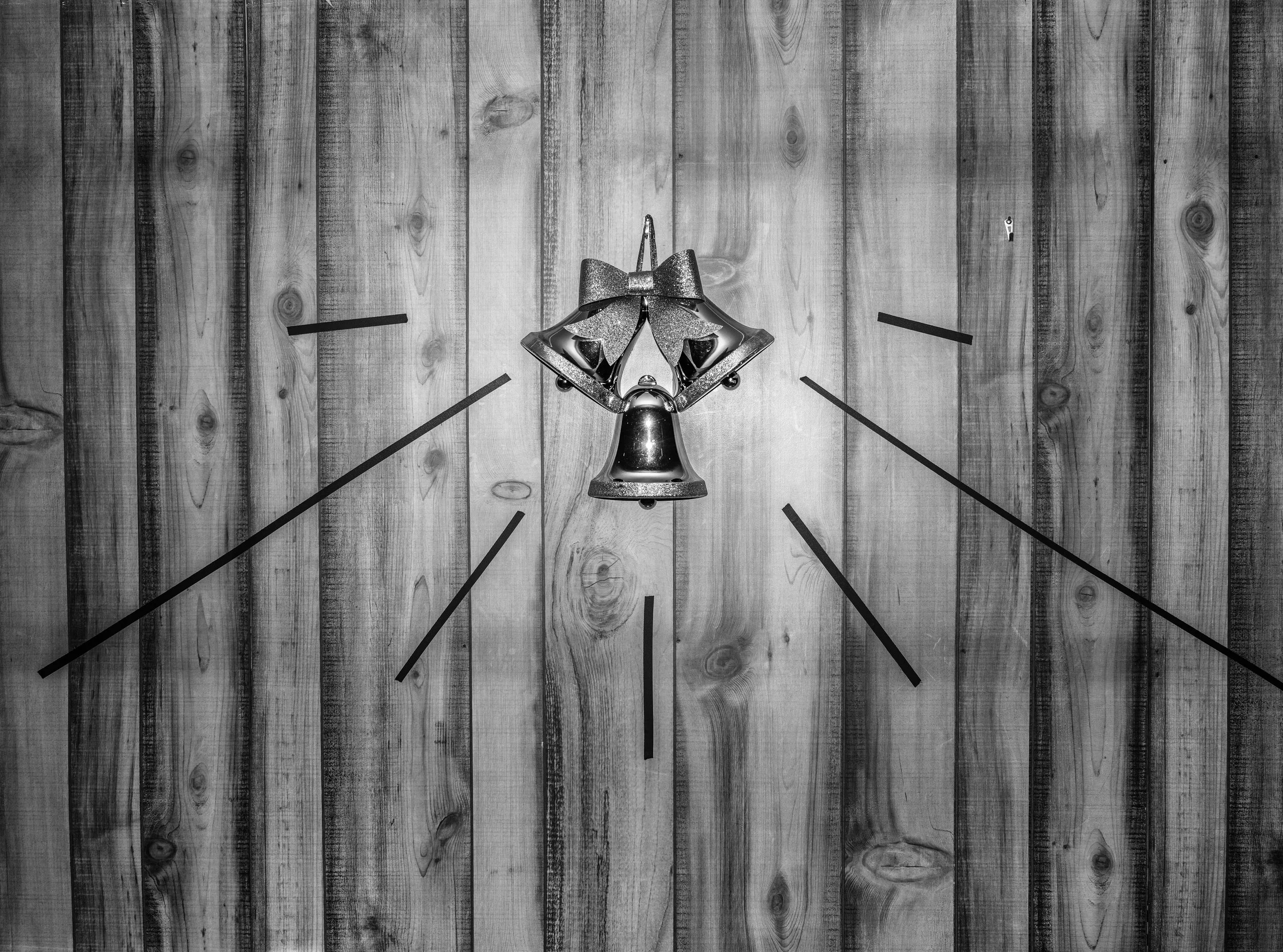
AY: Pretty quickly, I knew I wanted to make work in that space. As the images started to accumulate, a theme began to emerge—something like a haunted house, drawing on horror film references. The tropes, the visual language, the grammar of those films—it all surfaced naturally. The environment itself already felt like it belonged to that genre, so the work just grew out of it.
MS: That makes me think of something—I’m sure there’s a lot written about this—but when you were talking about your lack of agency as a kid, especially during immigration, it reminded me of a recurring idea in horror films. The position children are put in is often the most terrifying, precisely because they have no control. They’re at the mercy of adults who are themselves out of control.
In haunted house stories, for instance, it’s never up to the kids to decide when enough is enough and to leave. Or take The Shining—Danny’s situation is the scariest part of that film to me. He has no say in being there. He didn’t choose it; he’s just thrust into it, and he’s the least capable of escaping. He’s completely subject to the decisions of the adults around him.
You see the same thing in other classic horror films—TheAmityville Horror, for example. The kids have zero agency. And it feels like, even on a subconscious level, horror as a genre is working through that anxiety. There’s a lot going on beneath the surface—maybe not always intentional, but it reflects what we’re collectively afraid of.
That’s why what you said about working in hotel rooms struck me. On one hand, it’s about accepting a lack of control—you work with whatever space you’re given. But on the other hand, you reclaim control by turning it into a temporary studio. And with this house, and the horror references, it feels like you’re engaging with those same ideas—control, agency, power.
AY: Yeah, it’s a really perceptive observation. You’re absolutely right about the lack of agency children have in those films. I think that’s one of the reasons I was so drawn to them as a kid.
I had no say in leaving my home country and coming to America. Suddenly, I was in this large suburban house, in a completely unfamiliar environment. And the kids my age were often hostile toward me because of my Russian background—this was at the tail end of the Cold War, so there was a lot of suspicion and fear.
At the time, I didn’t have the emotional tools to process any of that. I couldn’t articulate what I was feeling or organize it into a coherent narrative. But horror films became a kind of proxy—a way to experience and process those emotions indirectly. They condensed all those feelings into something I could engage with.
That’s why I became so fascinated by them—terrified, but also captivated. And I think that fascination has stayed with me. Those films gave me a way to confront, in a contained and cathartic way, what was otherwise a much larger, more overwhelming experience of life at that time.
MS: Have you ever read In the Dust of This Planet?
AY: No—I haven’t even heard of it.
MS: It’s by Eugene Thacker. As I understand it, his main idea is that some concepts are just too overwhelming to confront directly—things like non-existence or the limits of human understanding. So we approach them indirectly through horror and science fiction.
In Thacker’s view, those genres become a kind of proxy to examine issues that are unthinkable. Through haunted houses or monsters, suddenly these heavy, abstract ideas become more approachable.
I’ve always liked horror movies, especially the slower, more atmospheric ones. The visuals are so great. Even as a kid, there was something fascinating about the look and feel of those older horror films.
You’ve talked before about the uncanny—this seems connected.
AY: Yeah, definitely. And something a lot of people don’t realize is that horror as a genre didn’t really exist in Soviet Russia—at least not in the same way. There were no horror films or literature like we have here.
The regime was built on projecting a sense of utopia—strength, stability, control. The main fear wasn’t elections; it was revolution. And fear can actually be counterproductive in that context. If people are already uneasy and they can’t vote you out, then unrest can escalate into something much more dangerous.
MS: Right.
AY: So instead of cultivating fear, the system emphasized the opposite—security, unity, this idea that you’re living in the best possible society.
In the U.S., it’s almost inverted. In a democracy, politicians aren’t worried about revolution as much as they are about losing elections. And one of the most effective ways to mobilize people is through fear.
You can’t just say everything is perfect—because then why would anyone vote for change? So there’s an incentive to emphasize what’s broken, what’s threatening. “Things are bad, and I’m the one who can fix them.”
MS: That makes sense.
AY: In that sense, horror functions almost like a cultural parallel—it reflects and reinforces that atmosphere. It becomes part of how fear circulates in society.
So coming from that background, it was a shock. I grew up with imagery of harmony—fields of wheat, collective progress, that kind of thing. And then suddenly it’s Freddy Krueger.
MS: Yeah—this constant sense of tension, like something’s always about to go wrong.
AY: Exactly.
MS: I’ve never really thought about horror in political terms like that. I’ve tended to connect it more to things like our Puritan history—moral anxiety, repression.
But what you’re saying makes sense. I mean, I’m sure Russian folklore still has ghosts and dark stories.
AY: Oh, definitely. But in terms of mainstream narratives, it’s different. You don’t want stories that destabilize things if your goal is to preserve the system. If you’re trying to oust someone in office, the pitch can’t exactly be, “Everything’s great.” I mean, I guess it could be—like, “things are great, I’ll just improve them”—but that’s not really how people operate.
It’s not a compelling pitch. No one responds to “your car is great, here’s a slightly better one.” It’s always framed as: “your car is dangerous, it’s going to fail, you need this new one to stay safe.” That’s how everything operates—especially in America.
I scroll through Instagram and every ad is trying to scare you. Microplastics in your water, your clothes, your detergent. Chemicals in your food. The sun is bad for you—no, wait, the sun is good for you. Everything is supposedly harming you unless you buy this one product that will save you from imminent death.
MS: Yeah. It’s interesting hearing how that connects to your relationship with horror—it feels very aligned.
AY: I will say, though, as a kid I wasn’t aware of any of this. I just knew I lived in a strange, slightly eerie suburban house, surrounded by kids who felt hostile. I hadn’t seen horror movies before, and suddenly there they were on TV—depicting eerie houses, hostile environments, graphic violence I’d never encountered. I was completely captivated by the intensity of it.
That experience sort of shaped me. I became more attuned to that atmosphere, even if I didn’t understand it at the time.
I recently learned the term “engram.” It’s from neuroscience. It refers to how memories are encoded through networks of neurons. You see a tree, and a specific network activates. Later, when you see or even hear the word “tree,” that same network lights up again—that’s how recognition works.
Over time, these networks connect and reshape themselves, which is why memory isn’t fixed. So those early horror films became engrams for me—clusters of associations tied to fear, atmosphere, and intensity.
MS: There’s this recurring idea—especially in films about homes, like Amityville or Poltergeist—that there’s underlying financial anxiety. Families are always on the brink, moving into houses they can’t really afford.
It seems like the real power of those films isn’t the gore or effects. It’s how people project their anxieties onto the things around them. The adults financial stress is expressed through the haunted house, just as the children’s lack of control is expressed through the haunted house. That’s what makes them compelling.
AY: Exactly. The mind has this need to create coherent personal narratives—to make sense of experience. But the more stress you’re under, the harder that becomes.
When stress becomes overwhelming, that ability collapses. That’s what you see in prolonged trauma or PTSD—people can’t organize their experiences into something manageable, and it starts to disrupt their ability to function.
Horror provides a kind of scaffolding for that. It gives you a structured narrative where you can project those anxieties—onto something already shaped and contained—rather than trying to process them in a raw, unstructured way.
MS: That’s really interesting. It also feels like horror gives you an explanation for when logic breaks down. If stress makes it hard to connect cause and effect in real life, horror lets you say, “maybe something supernatural is happening,” or “maybe there’s an external threat.”
I originally thought about your work in terms of the uncanny—those moments that disrupt routine and shake you out of passivity. But this idea—the way it connects to broader experiences of uncertainty—it feels even more expansive.
I think anyone who’s experienced uncertainty—which is basically everyone—can connect to that. And the isolation plays a big role too. Horror rarely works in dense urban settings.
AY: Yeah, it’s pretty rare.
MS: There are exceptions—like Candyman—but even then, it’s usually in abandoned or isolated parts of the city. Empty buildings, subway tunnels, forgotten industrial spaces.
AY: Exactly. You need isolation to create vulnerability. That sense of being trapped. You don’t feel that in a crowded apartment building in the middle of Brooklyn.
MS: Right. And visually, that isolation is compelling—it gives you so much to work with.
So you also wrote something to accompany the images, right?
AY: Yeah. When I got back to New York and reviewed the images, I realized they worked best as a sequence—they told a story, created a mood. That led me to the idea of making a book rather than an exhibition.
But I also realized that without context, people might just see them as “spooky house” images—surface-level, genre-based work. I didn’t want the visual language of horror to be where interpretation stopped.
So I wrote a short story to provide context—to guide viewers deeper into the work, rather than letting them just recognize the genre and move on.
MS: I remember reading an early draft of this book—we exchanged notes on it, and then you rewrote it. It’s been a long time, so my memory might be off, but my impression was that it was partly a straightforward account of how you ended up in that place and how the images came to be.
When we talked about it, though, what stuck with me was something more dreamlike—like you’d been temporarily dropped into a completely different environment and were trying to make it work for a while.
That actually reminds me of a pattern I’ve noticed in my own life. Whenever I’ve lived somewhere that didn’t quite work, I’d arrive with big plans—how I’d settle in, what I’d build, how I’d put down roots. Then at some point I’d realize, this isn’t it. From there, it’s a slow withdrawal. By the time I leave, I’ve stopped cleaning the house, stopped unpacking boxes— I’ve already checked out.
Those places end up feeling like strange detours, almost like paths I wandered onto briefly. Afterwards, I’m left wondering what the point of it all was. That’s how I connected with the first draft, but then you reworked the project.
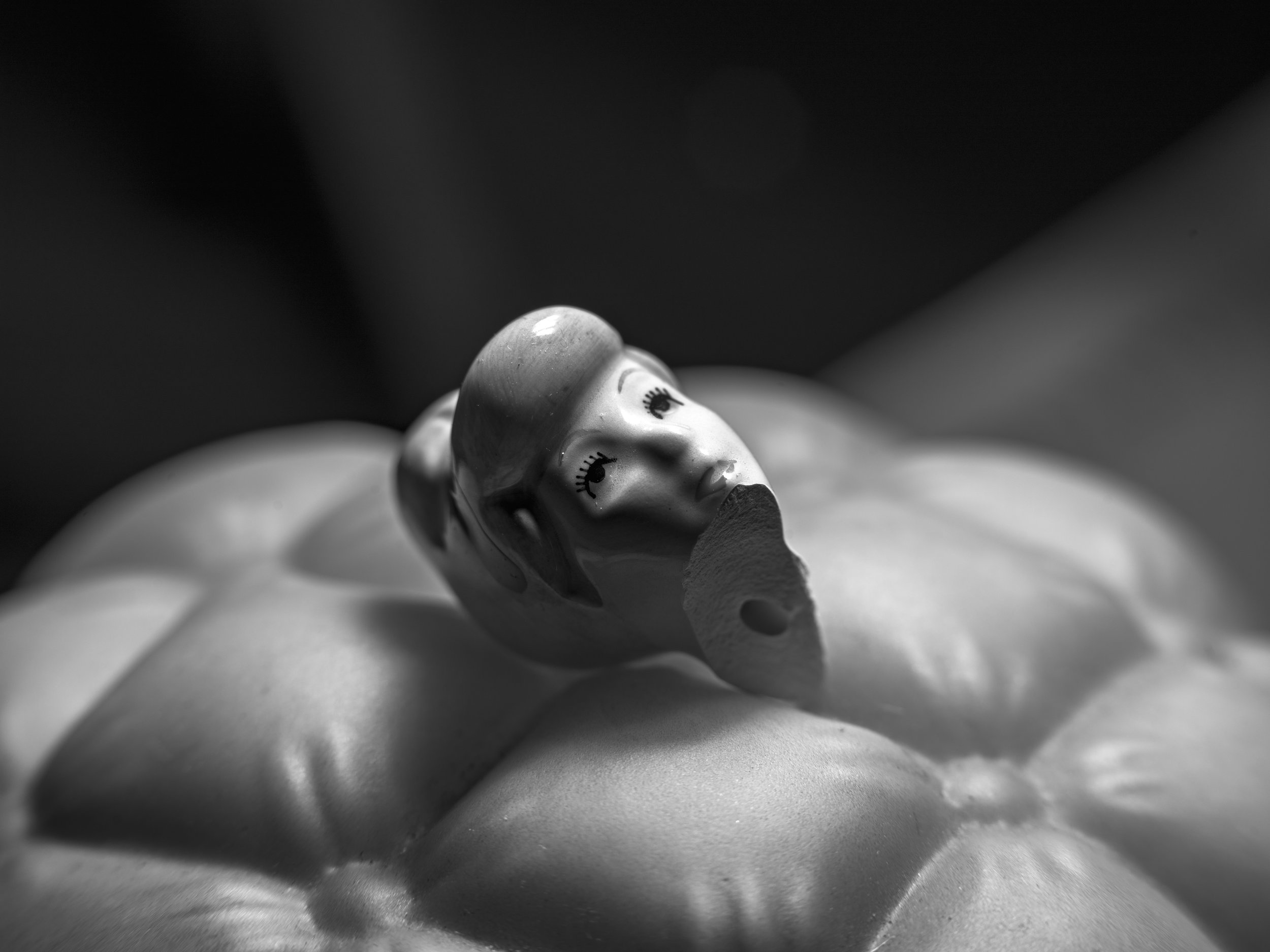
AY: Yeah, it evolved into something closer to a haunted house story. The narrators move into a house—its location is vague, the reasons for moving aren’t fully explained. What matters is that they begin developing an obsessive relationship with the house and its contents.
The husband starts finding objects hidden or buried throughout the space and begins arranging them into small altars. Gradually, the wife becomes absorbed in this process too. As the story unfolds, it becomes unclear whether they’re acting of their own will or whether the house itself is influencing—almost possessing—them.
What’s interesting is that, although their relationship to reality becomes more fractured, their lives also become easier. They grow closer, more open with each other. At first, the house feels strange and uncomfortable, but through this creative engagement with it, they start to feel at home—even as the space itself grows more bizarre.
So there’s this tension. It’s also a metaphor for creativity—the way it reshapes the world around us, how we project our inner lives outward. Eventually, something happens that forces them to leave, and the spell is broken. But they never really question what happened.
MS: That aligns with what I felt looking at the photographs—that it’s like stepping onto an alternate track for a while.
It reminds me of something I love in Japanese horror films: the way they subtly guide you into a dream state without you realizing it. You don’t notice you’ve left reality until there’s a sudden, shocking reveal.
AY: Yeah, it’s incredibly powerful—when the viewer realizes they’ve lost control over how they’re interpreting what they’re seeing.
MS: Exactly. I’ve had moments like that in my own life—experiences that didn’t feel strange at the time, but later I realized how off they actually were.
Travel is a good example. I remember being in Iceland—we drove deep into the highlands in a car that had no business being there. At the time, none of us thought it was dangerous. Then suddenly the car started breaking down, and we had this collective realization of how close we were to real trouble.
That delayed awareness fascinates me—how you can guide someone into something strange without them realizing it until they’re fully immersed.
AY: That ties into the idea of the uncanny, especially with houses. Older spaces already feel charged—they carry a history that predates you.
The house we moved into was over a century old. The walls were thick plaster with mesh backing, so trying to hang anything would just tear chunks out. The floors were uneven, the beams warped. All of it suggested a kind of personality—almost a presence.
MS: Right, and that’s how I think about your work more broadly, especially the interiors. On one level, they function formally—you can appreciate them purely in terms of composition. But there’s also this tension where something suddenly feels off, and it disrupts your sense of what a space is supposed to be.
It makes me think about places I’ve lived and forgotten. Sometimes I’ll suddenly remember a place from childhood that I haven’t thought about in decades. I’ll ask my mom about it, and she’ll confirm it. Then I start wondering—does that place still exist? What’s happened there since? Did we leave something behind?
I’m not sure why that fascinates me, but it does.
AY: It makes sense. We have long relationships with the places we inhabit. My wife still points out an apartment she lived in twenty years ago whenever we pass it. It’s like she’s acknowledging it.
I feel the same way about my childhood home. Those places leave a lasting imprint. And that’s part of what I wanted to explore—the idea that it’s not just us shaping the house, but the house shaping us.
MS: That connects to something you said earlier about the studio. Fixation on a space can give you a sense of purpose—a place to direct your energy.
For me, setting up a workspace is how I anchor myself in a new environment. But it’s also a balance. Sometimes the studio is exploratory, it’s about pushing into unknown territory. At other times, the studio is something to help stabilize me—it’s something familiar when everything else feels uncertain.
AY: Exactly. There’s an equilibrium. You’ve learned how to maintain it. And that fixation can go both ways—it can be grounding, or it can amplify anxiety. A space can either soothe you or reflect your instability back at you.
When I started making work in that house—setting up a studio, arranging objects—it felt like the space settled. The tension disappeared.
It’s almost like houses respond to creative energy. When you bring that kind of engagement into a space, it relaxes—it opens up to you.
MS: That resonates. Some places I’ve lived allowed that kind of relationship. Others never became more than shelter.
I remember an apartment I had in Pennsylvania—it never clicked. After a few months, I gave up trying to make it a home. It was just a place to sleep.
AY: It’s like meeting people. Sometimes there’s an instant connection; other times, there’s nothing, no matter how much you have in common.
MS: Exactly. And it challenges the idea that changing location will fix everything. Sometimes it does—but sometimes a place just doesn’t work, and the sooner you leave, the better.
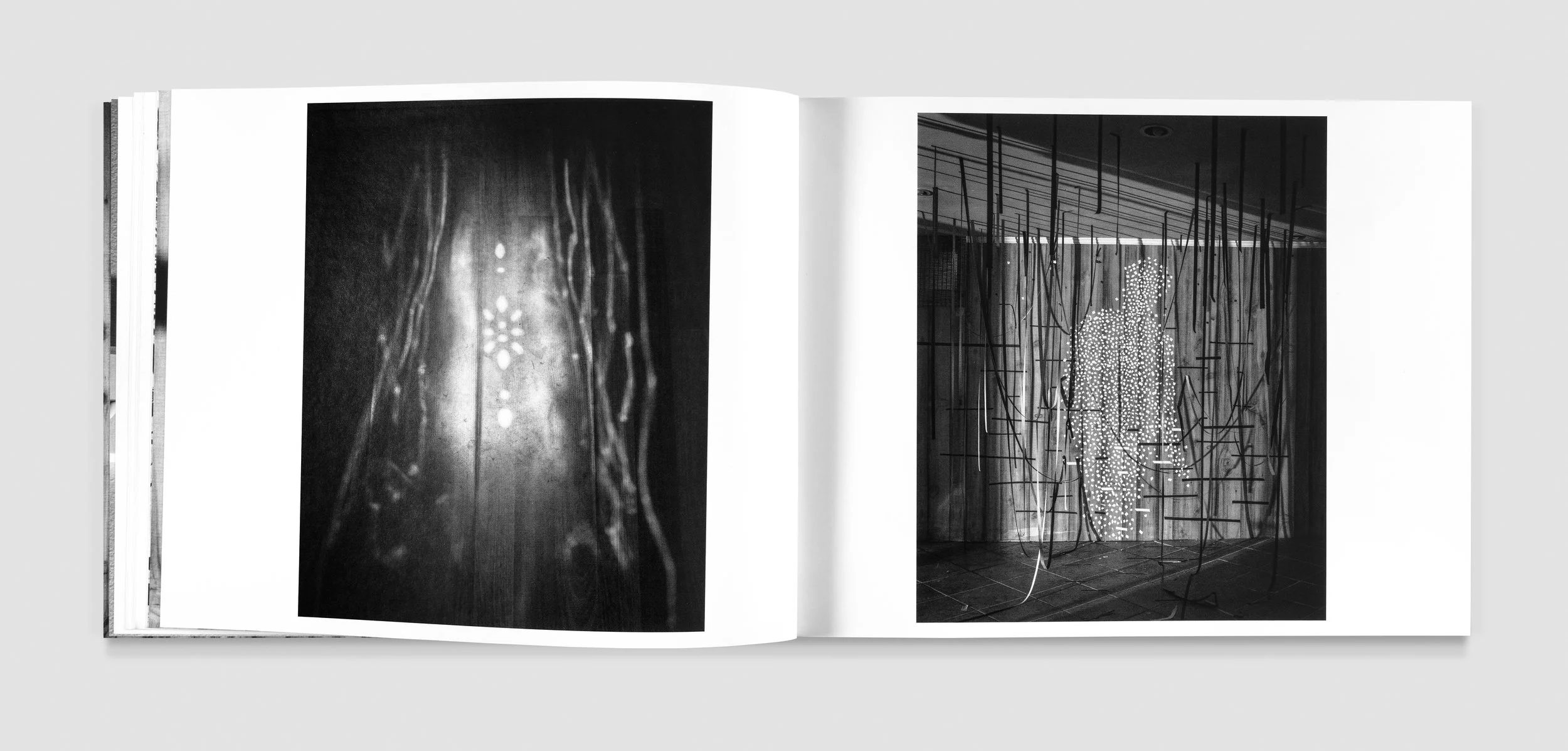
Volume: Thank you to Alex for taking the time to talk about 5 Garfield Avenue. Limited edition copies of his new book are available for purchase under the Books tab on Volume’s website. To view more of Alex’s work visit his website here or view his instagram profile @alexyudzon.