

Blaise Rosenthal
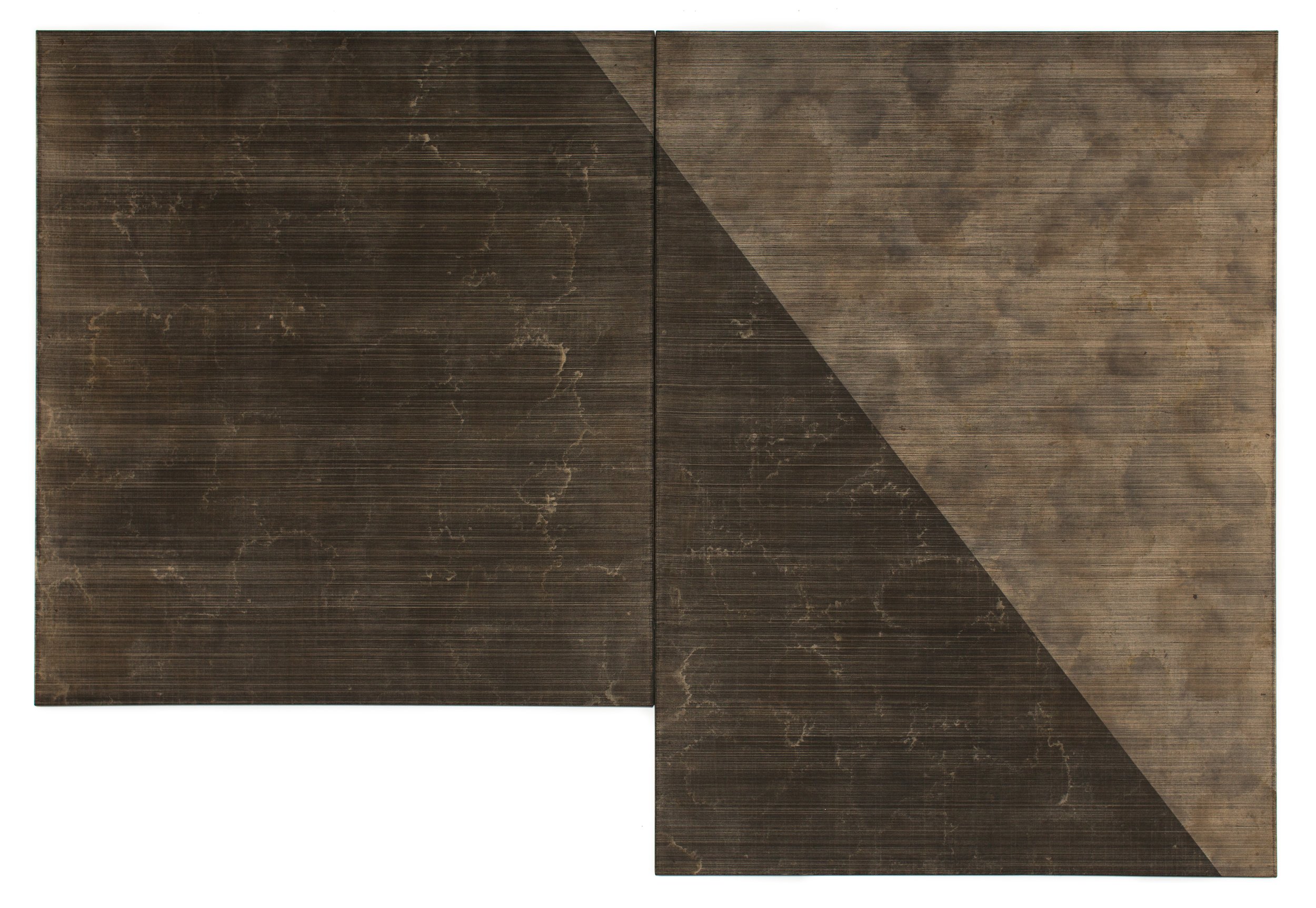
the mainland | 2018 | charcoal, earth pigments, and acrylic on canvas | 75 × 110”
MS: Let’s start with some background. I know you were born in New York—where exactly?
BR: Queens, New York City.
MS: And how old were you when you left?
BR: Pretty young. We settled in Northern California when I was around six, but before that we moved around a lot. I lived in Mexico for a bit, spent some time in the Bay Area, and then we landed in the foothills. Those early years were pretty transient.
MS: You mentioned living in Mexico?
BR: Yeah—full hippie style. Hammocks on the beach. Then my mom had a Mexican partner, and we lived in the rainforest with his family. I was really young, but it was basically a dirt-floor hut—dogs and chickens running around.
MS: So most of your early memories start in California?
BR: I do have vivid flashes from Mexico—it was such a rich experience—but they’re more like fragments of memories. Like arriving in Puerto Escondido on a bus and seeing the Pacific for the first time. But Northern California is where I really settled and where I feel like I’m from.
MS: What about your early experiences with visual art? For some artists it starts young, for others much later. Did you grow up making things?
BR: I was very young. Regarding the word making, that’s an interesting question, because now my work is very process-oriented. But back then, I wasn’t interested in making objects so much as just drawing. I loved illustration, not fabrication.
My mom was anti-television, so from a really young age—three or four—I’d just get handed a stack of scrap paper and a pencil and be told to keep busy. I’d spend hours drawing, mostly faces. I was obsessed with figuring out how to draw a nose; how to create that sense of three-dimensionality. Even in the beginning, I was thinking about those problems.
I wasn’t thinking about a painting as an object—that physicality, which is so important to me now. Back then it was more about drawing as a way of exploring the self. Not identity in a social or political sense, but more like: what am I? Becoming self-aware after nonexistence is a pretty profound experience. So I was trying to understand what it meant to be this thing that I am. I’m still working on that, but I’ve got a few ideas now.
MS: That sounds familiar. My mom and I lived in a very remote area outside Jacksonville, Oregon when I was born. She was really focused on being outdoors, and that DIY mindset carried through my whole upbringing.
For me, drawing was a way to engage with things I was curious about—a way of getting closer to them.
BR: Yeah, I relate to that. I would draw my friends, my world, the clothes I wanted to wear. I drew skateboarding constantly because it was what I wanted to be doing.
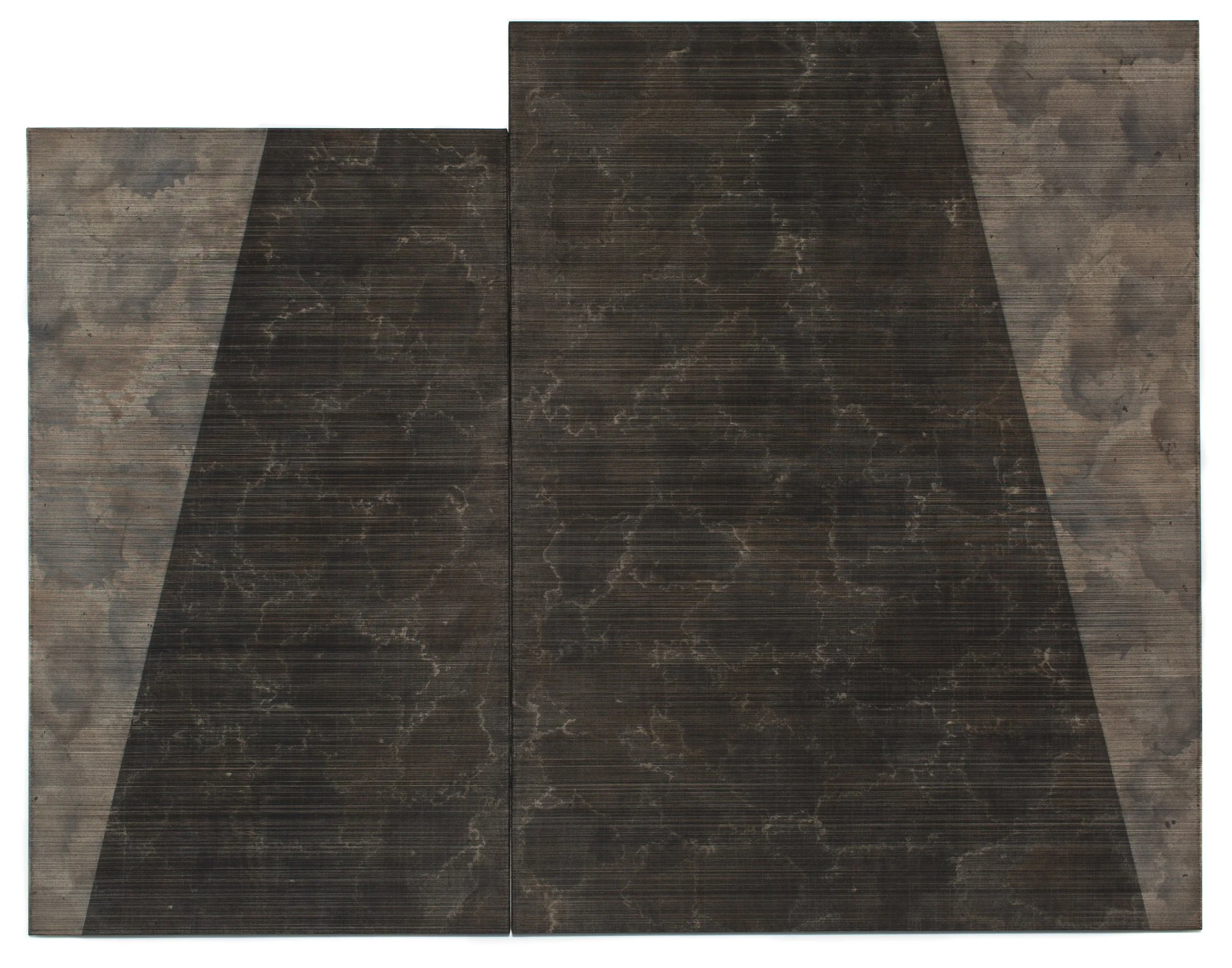
the old man | 2018 | charcoal, earth pigments, and acrylic on canvas, | 66 ×88”
MS: Absolutely. As a teenager, my interest in art was eclipsed by snowboarding. I continued drawing, but in the context of snowboarding. My friends and I would draw graphics, or features that we wanted to ride and talk about those. I still had a visual sensibility that I was in touch with, but I wasn’t thinking about art in the traditional sense.
You’ve had a long career in snowboarding—did art stay with you during that time?
BR: I came to snowboarding through skateboarding, and in the late ’80s it was common for skaters to also be artists—people like Neil Blender, Chris Miller, Mark Gonzales. There was a strong DIY culture.
I took art classes, made silkscreens, printed my own graphics on blank T-shirts because I couldn’t afford the real ones. I even silkscreened snowboard graphics onto ski pants. Making art was just part of the culture.
When I started snowboarding, it took over at first. But once I was sponsored, I got involved in creative aspects—graphics, art direction, working with brands. Art was always there, just never framed as a career. It felt too natural to even think of it that way.
Later, when snowboarding slowed down, I needed something I could fully invest my energy into—something with room for expression, exploration, progression. That’s when art became central.
My wife played a big role too. I tend to just dive into things and figure them out, but she’d research them—like how to stretch a canvas—and show me. Over time I started paying attention to craft: how corners are folded, how surfaces are built. Looking at painters like John Zurier, where the details of construction feel like part of the gesture.
Without formal training, I’m often always asking: what is a painting?
MS: That makes sense. You absorb things over time, and they slowly shape your practice.
BR: Exactly. My work is built from accumulated interests. I’ll sew canvases together, break away from the rectangle—just keep pushing the format.
Art became my primary focus, and for the past 20 years, I’ve been completely immersed in it.
MS: When I first got into snowboarding, I remember watching videos like Stomping Grounds or Simple Pleasures. Your riding had a huge impact on me.
Years later, when I got back into snowboarding, I started seeing your paintings and wondered if it was the same person. What struck me was the level of commitment—they were incredibly well made. And the themes — land and geologic time — those really resonated with me.
BR: That’s interesting, because snowboarding was always an aesthetic pursuit for me as much as an athletic one. Style mattered.
Painting feels similar. There’s expression and narrative, but there’s also play—the “tricks” of it. Like learning a new maneuver in snowboarding, discovering a new material process opens up possibilities in painting.
Both are about building a vocabulary, then using it to express something larger. And both are social in a way—I think about other painters when I paint, just like I thought about other riders when I snowboarded.
MS: That connection makes a lot of sense. It’s like learning by imitation and then evolving into your own approach.
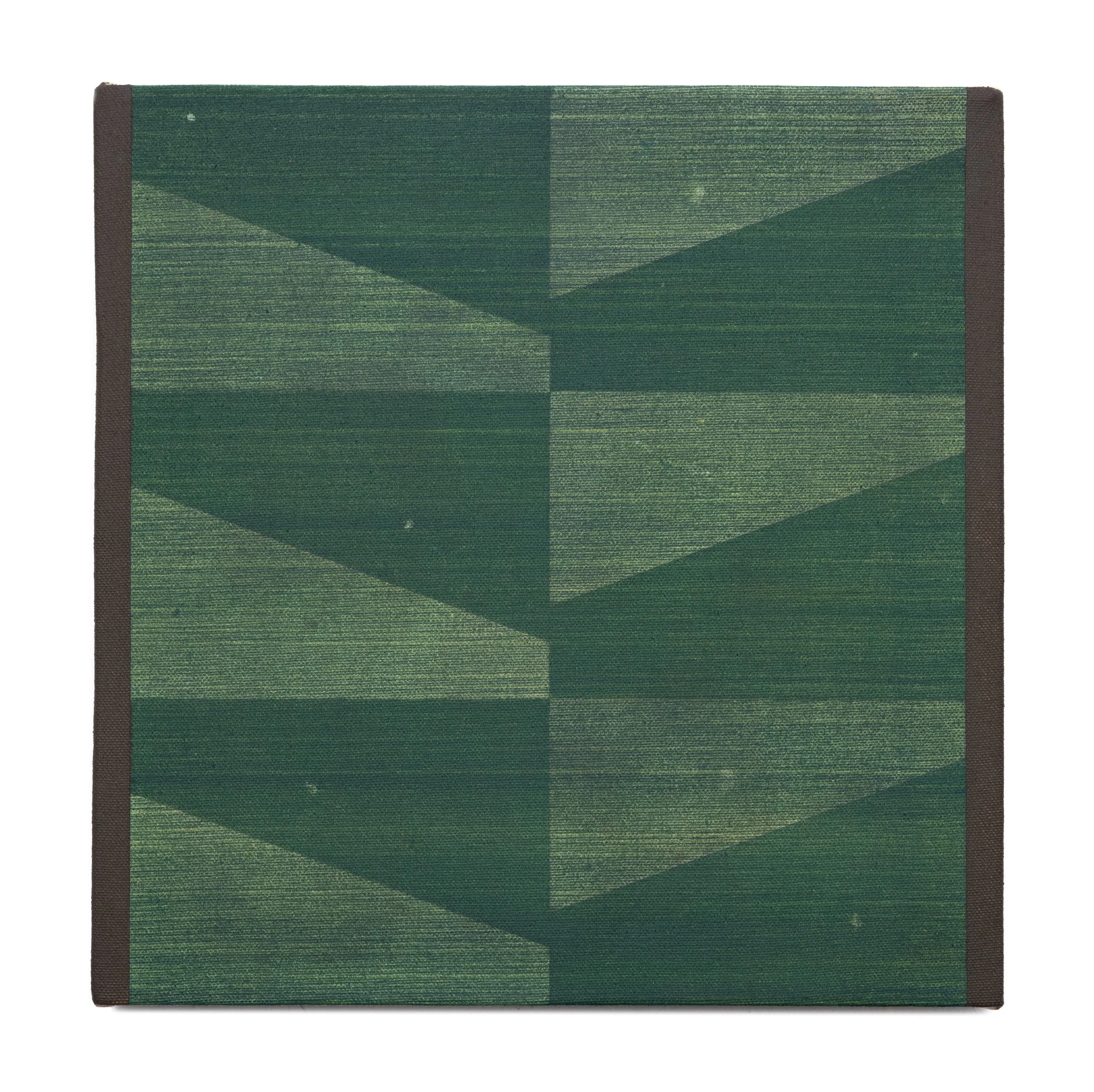
Untitled (Folio) | 2023 | pastel, charcoal, earth pigment and acrylic on canvas | 12 × 12”
BR: Exactly.
MS: One thing I’ve struggled with, though, is the difference in community. Snowboarding felt open and immediate. The art world feels… harder to access.
BR: I’ve felt that too. Snowboarding is incredibly social—you make friends easily. In the art world, there’s a distance. A separation between collectors and artists, and even among artists themselves.
I’ve been surprised by how little support there is. In snowboarding, you help younger riders, bring people along. In art, that’s much rarer. I’ve made a handful of real friendships in 20 years.
There’s also a kind of timidity now—both in behavior and in the work. Risk-taking can be seen as inappropriate or even offensive.
MS: I’ve noticed that too. There’s a kind of hyper-professionalism that shapes how people interact. Everything feels guarded.
BR: And that fear of saying the wrong thing—it’s unhealthy. Sometimes being wrong is part of learning. Art should reflect that messy process.
MS: Right. If everyone is afraid to step out of line, the work becomes cautious and predictable.
BR: Exactly. There’s a lot of talk about ideals—egalitarianism, justice—but the system still depends on wealth and hierarchy. That contradiction is hard to ignore.
MS: That’s what I struggle with too. I don’t know if art is actually an effective vehicle for social change, especially when it operates within those structures.
BR: I think at a certain point, you just recognize it for what it is. For me, the work comes back to something more personal—landscape, environment, lived experience.
MS: Same here. Beyond all that, it’s the act of making that matters.
BR: Exactly. Snowboarding and painting—those are the things I love. Any financial aspect just supports the ability to keep doing them.
I just want to keep progressing, keep engaging deeply with the work.
MS: Definitely. I don’t want my studio work to have that kind of agenda. I’m not trying to push a social or political perspective. There is a thought process embedded in my work, but I’m not going to claim that it’s anything more than a picture.
BR: Right. The agenda is more personal. Rather than towing the line on some broader social concept, I like art as a means of sincere personal investigation and expression. Being fully committed means being able to go deeper and discover more.
And when it comes to exhibiting work, I do care about presentation—the titles, the installation, how the pieces interact. A show becomes its own composition. It shapes how the work is experienced.
I like openness, but not total chaos. It’s a balance.
MS: I like people to approach things from their own perspective, but I am ultimately trying to lead them somewhere. Maybe not somewhere specific, but into a territory. That’s what makes a solo show exciting. It’s an opportunity to bring a body of work together and arrange it so it becomes a collective statement—a composition in its own right. That’s why installation shots matter. They’re not just proof that the show happened; they demonstrate how the works interact, reinforce one another, and extend each other’s meaning.
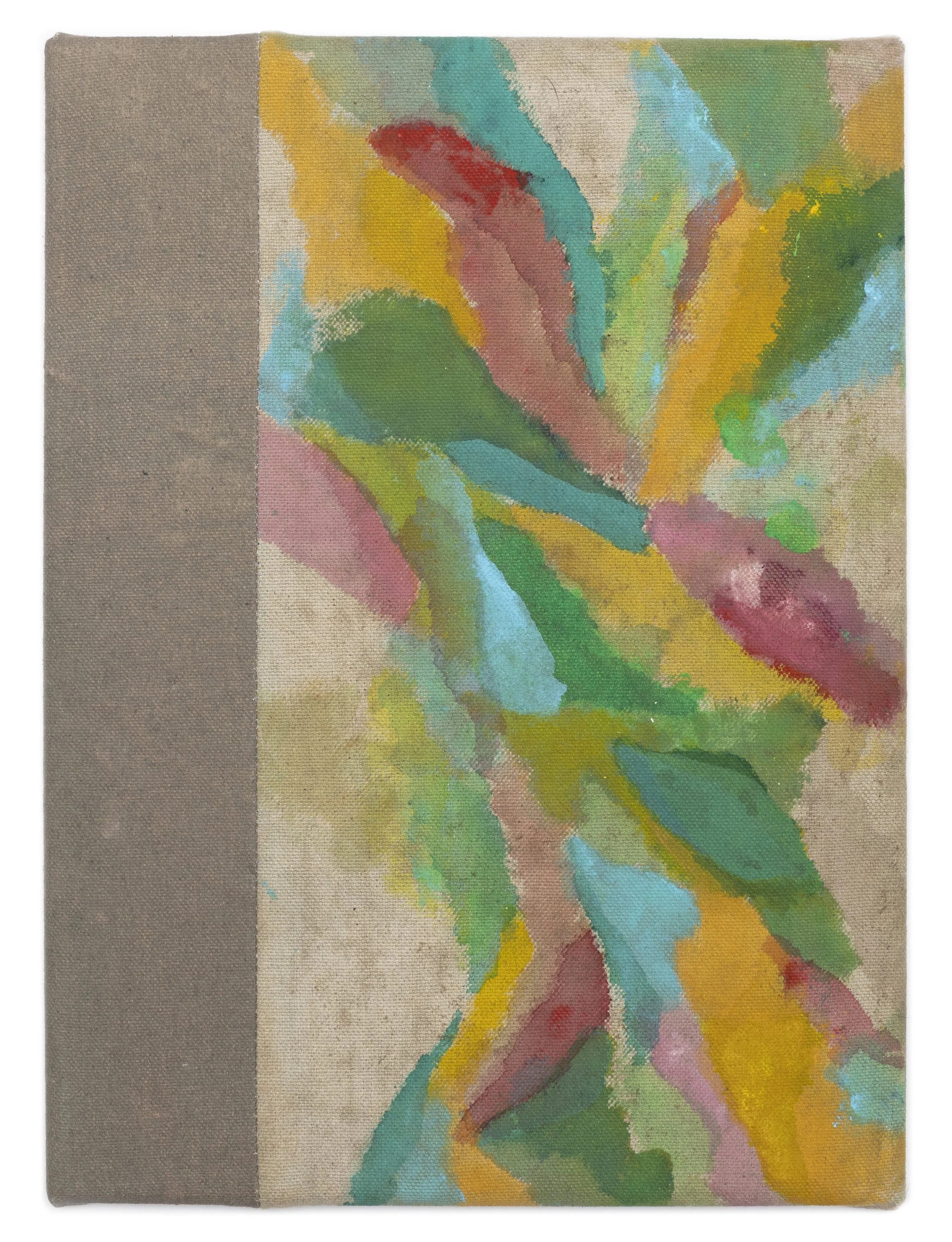
Composite (Late Spring) | 2021 | acrylic on sewn canvas | 12 × 9”
BR: And I think people can sometimes over-explain things. But a strong press release or exhibition statement plays an important role. At its best, it creates a context in which each painting becomes more resonant. The relationships between the works are elevated.
I work with specific visual vocabularies that evolve slowly—more like geological time than narrative progression. The changes are incremental, often subtle. Because of that, I don’t want to present a body of work that appears uniform at a glance. It might seem that way initially, but sustained attention reveals progression. When a show is arranged thoughtfully, it can heighten awareness of that internal diversity.
Abstract painting is similar to language. Every word is inherently abstract—there’s nothing “blue” about the word blue. Yet when enough words are linked together, they can communicate a vivid experience. A group of paintings can work in the same way.
MS: Right. It’s interesting because what we do is both open-ended and highly specific at the same time. Intention matters. If it didn’t, we wouldn’t be having this conversation.
BR: Exactly. Communication depends on shared patterns of experience, but those patterns have limitations of perspective. There’s no point at which meaning can be fully transferred or confirmed from one person to another.
Without some faith in the power of abstraction, nothing can be discussed or understood. We offer suggestions that feel convincing, but they still require belief. Faith isn’t certainty—it’s trust. In painting, too, many decisions are based on accumulated experience rather than absolute truth. There’s no final point where something becomes definitively “true.” Everything remains, in some sense, an open question. That uncertainty is what keeps things dynamic—what preserves the mystery of existence.
MS: Definitely. All communication operates through abstraction. Images, symbols, and language are not the ideas themselves, but representations of them. We use these tools to project meaning outward, but we can never fully know how that meaning is received on the other end. At some point, communication gives way to trust—you have to believe that what you intended has, in some form, been understood.
That’s a good topic. We’ll have to talk more about that sometime.
Did you ever feel like you had to separate your life in snowboarding from your life in art? I used to. I was hesitant to talk about how much time in the mountains influenced my studio practice.
BR: I used to separate them too. Now I don’t. It’s all part of who I am.
MS: Same here. I used to keep that side of myself private, but it’s too integral to ignore.
BR: Exactly. Otherwise it’s dishonest. Honest, vulnerable work matters—and you can’t get there by performing a cliché of what an artist is supposed to be. Snowboarding, skateboarding, even surfing—they shape how I think and how I express myself.
MS: Absolutely. Studio work reflects how we process the world. Snowboarding has changed how I see landscape—how I read terrain. Even without snow, I notice fall lines, features, and transitions. Board sports encourage creative engagement with the environment. Studio work does something similar, but intellectually; snowboarding is that same engagement, physically embodied.
I’m curious about your move into abstraction. When did you begin to move away from representation?
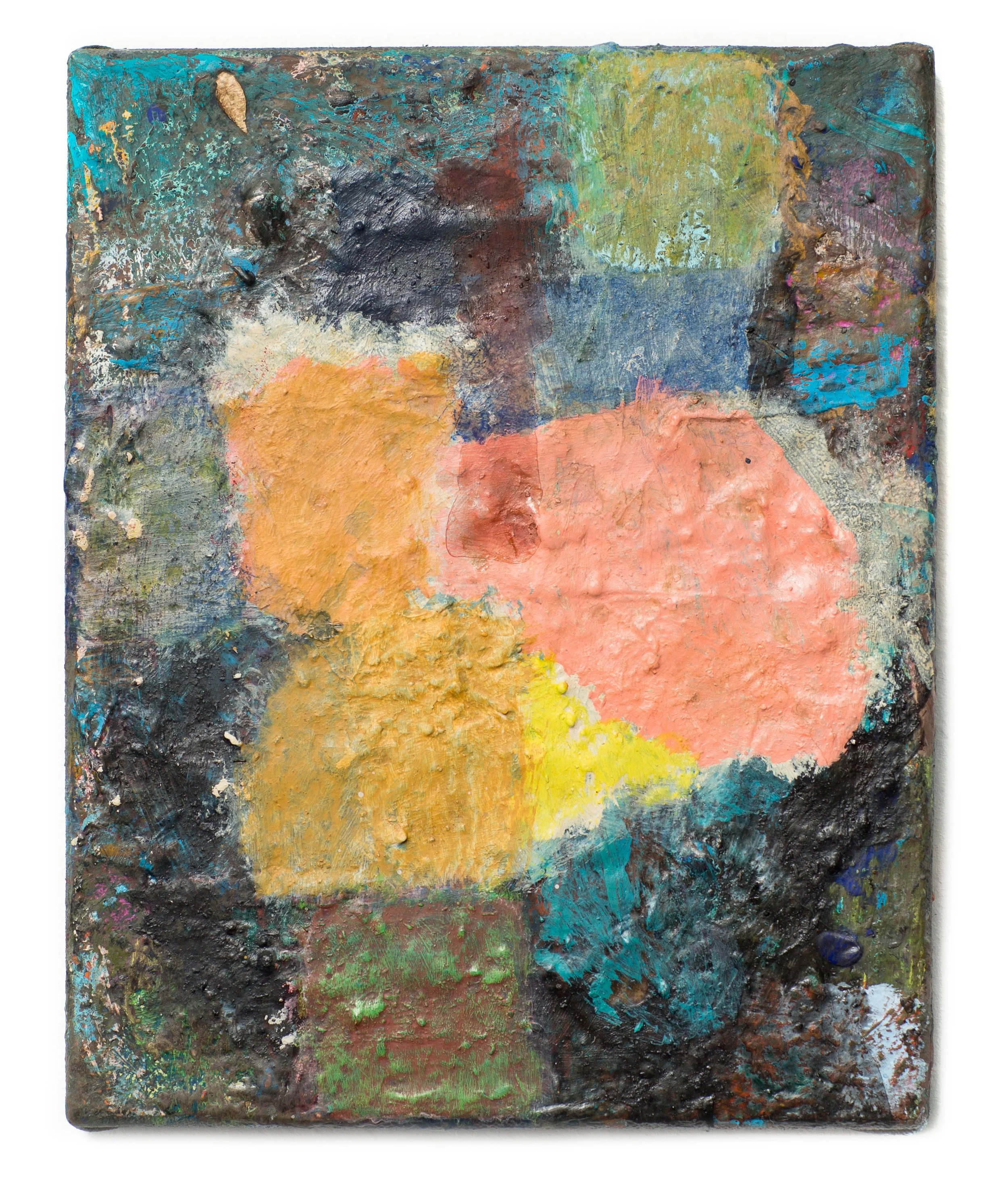
Overpainting | 2023 | acrylic, charcoal, and earth pigment on canvas | 10 × 8”
BR: I was always drawn to Impressionism. My mom liked it, and we’d occasionally go look at it together. I was interested in the subject matter, landscape, but also in the openness — the potential for the paint to be both physical and representational at once. There’s a certain of magic in that. With someone like Caravaggio, the illusion dominates. With Impressionism, the materiality of paint remains visible and for some reason that continues to captivate me.
I was also interested in early modernism—the way German Expressionists could suggest a face with just a few crude marks fascinated me.
Coming from board sports and street culture, I was naturally drawn to Basquiat. His work felt immediate and constructed from raw gesture in a contemporary setting. None of his individual marks were traditionally “refined,” but together they formed something powerful and elegant.
I experimented a lot. At one point I made a series of Pac-Man ghost paintings—trying to find a personal vocabulary connected to pop culture and the communities I was part of. But eventually I started questioning whether those figures were necessary. I became more interested in what remained when you stripped things like that away.
That led me toward abstraction—and toward reduction. I kept removing elements. First the figures, then color as a focal point. I wanted to know: what is a painting without these hooks? Not withholding, exactly, but resisting the urge to give something too easily. There’s a different kind of richness in subtlety and that which is visually quiet.
I’ve always been more interested in the internal language of a community than in broad accessibility. In skateboarding, I cared what other skaters thought—not the general public. Painting became similar. I wanted fluency in a more nuanced visual language.
From there, it was just time in the studio—working obsessively, repeating gestures, refining processes. Some of my work is built from extreme repetition—simple marks that accumulate into something larger, something rhythmic.
At the same time, I resist over-control. I don’t like paintings that feel suffocated. So I introduce elements that disrupt precision—textures, stains, irregularities. Somewhere between control and release, something resolves. Not perfect—but complete in its own terms.
MS: That resonates with me. My move toward abstraction was also about distillation—removing as much as possible without losing the essence. It became a kind of discipline, a way to maintain focus. By subtracting, I could go deeper rather than broader.
BR: Exactly. It’s like stripping things down to what actually matters. There’s a reason ascetic practices exist—removing distraction to get closer to something fundamental.
I also think the art world’s obsession with constant novelty is limiting. Movements emerge, get explored briefly, and then are abandoned. That feels premature.
MS: Right. It can feel like ideas are discarded before they’re fully understood.
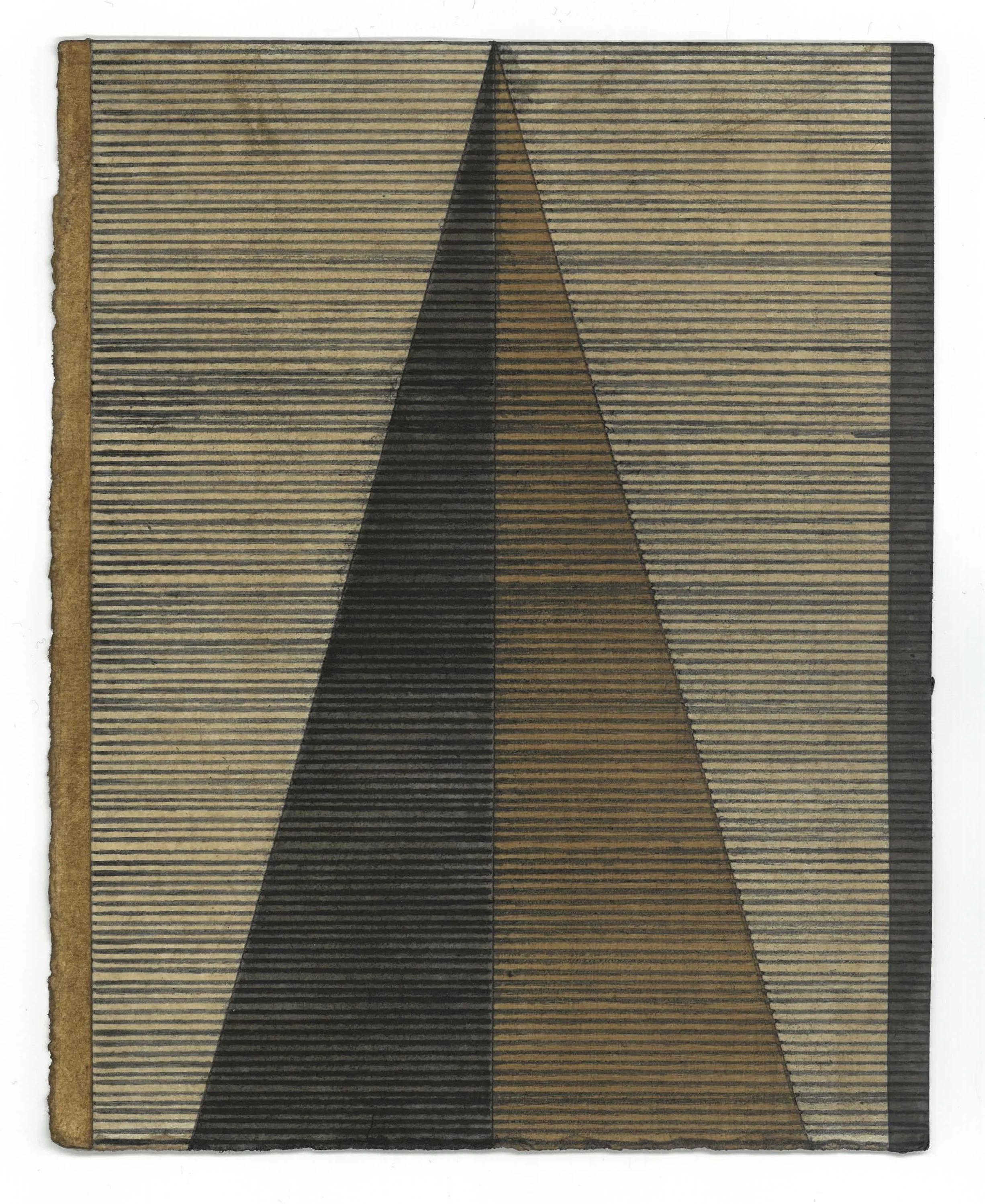
Untitled (Stone) 2024 | charcoal, earth pigments and acrylic on paper | 7 × 5.5”
BR: Exactly. Why should a way of painting be exhausted in ten years? I’ve spent decades working and still feel like I’m just beginning to understand what I’m doing.
MS: I wanted to ask about minimalism and its relationship to landscape. For me, land art made minimalism feel tangible. It gave me an experiential value to assign to the work. Land art made minimalism less theoretical, and more about actual experiences and environments.
Your work is related to landscape. Has land art or minimalism shaped your views on painting?
BR: Yeah, my work is generally inspired by the natural world, and it’s depiction throughout art history. Rather than simply focused on the visual, I would say that the works attempt to reflect a more wholistic representation of the experiential qualities of a place, or sometimes, of every place I’ve ever been as filtered down though my memories and subconscious.
Regarding Minimalism, yes and no. I’m influenced by minimalism for the sake of its vocabularies, but not in an academic or philosophical sense. It is because of its dramatic potentials, clarity and relationship to universal forms, and therefore universal experience that I’m drawn to it. But I want to use it to express and share experience, which doesn’t seem like a very minimalist agenda. Additionally minimalism as a movement was primarily focused on sculpture, or, “specific objects” to quote Donald Judd. But I’m really interested in drawing and painting and their potentials. I think more about painters like Van Gogh or Matisse than about Judd when I’m working.
Agnes Martin has been important, though. Her work helped me to rethink how a grid could function—not only as a compositional structure or support, but as the content itself. Though she never considered herself a minimalist, but instead claimed to be working in an Abstract Expressionist tradition.
I do like when paintings exist as objects, in a very physically present way, but I also want them to imply something beyond themselves—something bigger that can allow for potentially infinite contemplation with a range of experiential outcomes that can be explored depending on the viewer.
Regarding land art, again, it’s aesthetically attractive, but not much of an influence. I’m a painter, its what I’m most interested in.
MS: Being in environments like Mt. Hood, where we were last together, create a space for reflection. It makes you ask: what is essential here? What is actually affecting me?
BR: Exactly. Those environments exist outside of human systems of meaning. They’re not constructed narratives—they just are. There’s something powerful about encountering them directly. They strip away the tendency for interpretation and demand a more immediate contact with the “real” world. That experience is usually grounding, and can be profound.
I think we’re drawn to those places because they exist beyond us—because they haven’t been fully shaped by human intention. They allow us to step outside our own frameworks, even briefly into the present moment of ourselves. That’s a rare and valuable experience. I’d like to make paintings that defy authorship and achieve as close of an effect to that as possible.
Volume: Thank you to Blaise for taking the time to talk about his work. To view additional work visit Municipal Bonds or his website at Blaise Rosenthal